
Urban Flood Risk Cover For Lagos State In Nigeria
Tripartite agreement programme
A Public-Private Partnership Enhancing Disaster Resilience
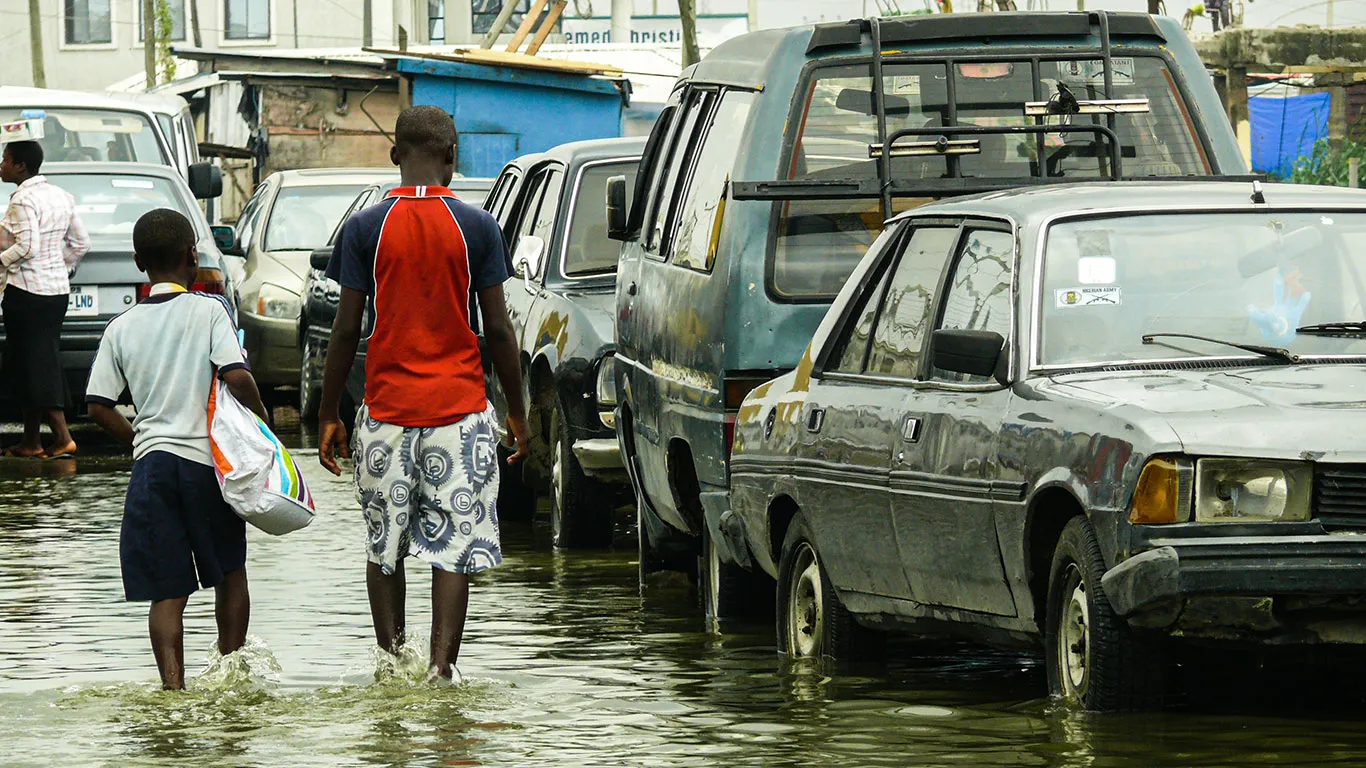
Lagos State is highly susceptible to flooding due to rapid urbanization, inadequate drainage systems, and climate change. The 2022 floods highlighted the devastating impact of such events, with over 600 deaths and 1.3 million people displaced due to the worst floods in a decade. Flooding in Lagos State disproportionately affects poor and vulnerable populations.
This Tripartite project leverages an innovative parametric insurance solution to protect 1.7 million households (8.5 million people) in Lagos State. By leveraging predefined triggers based on flood magnitude, the scheme ensures rapid payouts, enhancing the resilience of urban populations to flood risks.
The protection gap
A significant portion of the Lagos population resides in informal settlements, such as slums and shantytowns, where housing structures are poorly constructed and lack resilience against extreme weather events. These areas’ residents are particularly exposed to the adverse effects of flooding without insurance protection.
Lagos State suffers from regular widespread flooding exacerbated by the impacts of climate change. The types of flooding the state is susceptible to includes pluvial flooding from local extreme rainfall; fluvial flooding from rivers overflow; and coastal flooding from storm surges.
The insurance solution
The insurance will release funds to the Lagos State Government that will contribute towards emergency disaster relief and rapid (re)construction of critical network infrastructures. The insurance product is expected to be integrated into the existing flood risk management framework, and to significantly enhance Lagos State’s flood resilience and contingency planning in the coming years.
A parametric flood insurance, following quantification of the flood risk across the State, that enables the rapid release of funding, covering emergency disaster relief or rapid reconstruction of critical assets/ infrastructure. The latter is to be decided by the Government.
The product forms a key part of Lagos State’s wider flood risk management and climate resilience strategy.
Insured Asset
Emergency relief measures, reconstruction of public assets.
Insured peril / hazard
Flood.
Geographic focus
Lagos State, Nigeria.
Policyholders
The policy holders are expected to be the Government of Nigeria, Lagos State Government, Ministry of Finance, Budget and National Planning, Lagos State Emergency Management Agency (LASEMA).
Estimated Beneficiaries
- Up to 4 million people (800,000 households), across 7 districts, with a focus on the most poor and vulnerable citizens.
- 8,700,000 people by 2025, of which 86% are poor and vulnerable.
Claims Payouts
In the event of a catastrophic flood, the product could provide access to up to USD 7.5 million in coverage. Claims payouts will go to [Lagos State Government] to support emergency response efforts, including financial payouts for those affected by flood. This includes disaster relief and direct cash transfers to affected communities.
Other project benefits
- Development of hazard, exposure and vulnerability database.
- Index development and product design (to complement ARC’s riverine product on national level).
- Prepared a solution for market tender.
- Defined payout mechanism including alignment of contingency plan.
- Assessed alignment of solution with existing regulation.
- UNDP, through its Insurance and Risk Finance Facility, will worked closely with the Federal Government of Nigeria to make risk management and risk transfer central to the way in which the country tackles both climate change and development.
Project impacts
- Increase of the resilience of poor and vulnerable population in Lagos State.
- Lagos State Government is enabled quick access to funds to support emergency response efforts, rapid emergency disaster relief or rapid repair/reconstruction of critical infrastructure.
- Prevent social, economic, and fiscal instability.
- UNDP is also supporting the Government of Nigeria to scale the flood insurance project to a national scheme, developing a National Disaster Risk Finance Strategy and contributing to the integration of risk finance into Nigeria’s Nationally Determined Contribution (NDC) 3.0.
Project Timeline
Project Launch: October 2022
Product Delivery: July 2025
Project Formal Close: November 2024
Project implementation cost
Approximately EUR 783’000, co-funded by the participating IDF industry members and the German Government through the InsuResilience Solutions Fund (ISF).
90% of premiums are supported by InsuResilience Solutions Fund (ISF); 10% by Lagos State in Year 1, with a strategy to increase government contributions and ensure the sustainability of the policy in Year 2 and beyond.
Programme Partners
The partners of the Tripartite Agreement Programme are:
- German Federal Ministry for Economic Cooperation and Development (BMZ), through the InsuResilience Solutions Fund (ISF).
- Insurance Development Forum (IDF).
- United Nations Development Programme (UNDP).
Lagos, Nigeria Government Project Members
- Lagos State Government.
- Lagos State Ministry of Finance, Budget and Economic Planning.
- Lagos State Emergency Management Agency (LASEMA).
Private Sector IDF Project Members & Partners
- AXA Climate
- Swiss Re
- AXA Mansard
- JBA Risk Management
- ICEYE – Satellite earth observation provider
- Africa Risk Capacity Ltd. (ARC Ltd.)
Partners
Key learnings from the Project
Delivered by project team members
Mapping the landscape and engaging key stakeholders
To better understand Nigeria’s risk landscape and identify the insurance product design focus of the Tripartite project, UNDP coordinated a national consultation process that included key institutions such as the National Insurance Commission (NAICOM), the Nigerian Meteorological Agency (NiMet) and the Nigeria Hydrological Services Agency (NIHSA), alongside private insurers and local stakeholders.
This work was complemented by a diagnostic study conducted by UNDP that outlined the current status of insurance and risk finance in the country, along with key risks and recommendations.
The process revealed that Nigeria is highly vulnerable to fluvial, pluvial and coastal flooding, driven by intense rainfall, river overflow and tidal surges along its extensive coastline. Annual losses are estimated to be between $307 million and $6.68 billion. In 2022, the worst floods on record destroyed more than 440,000 hectares of farmland and affected 4.4 million people across the country.
Within this national context, Lagos State was found to be one of the most flood-prone and climate-vulnerable states in Nigeria, given its geography, rapid urbanization and high population density.
Building on this national scoping, the consultation was strategically narrowed to focus on Lagos, where a prior feasibility study on urban flood risk management and transfer, conducted with support from FSD Africa, provided insight into the city’s exposure, vulnerabilities and institutional readiness for innovative risk transfer solutions. The consultation process was expanded to engage the Lagos State Emergency Management Agency (LASEMA), Lagos State Ministry of Finance, Lagos State Office of Geological Services, Lagos State Ministry of Economic Planning and Budget, Lagos State Urban Renewal Agency (LASURA), Lagos State Office of Sustainable Development Goals (OSDG), Lagos State Office of Drainage Services and the Ogun-Osun River Basin Development Authority (O-ORBDA).
Following the national and state-level consultations, UNDP, the consortium of IDF insurers interested in working in Nigeria, the Federal Government of Nigeria and the Lagos State Government agreed to focus the project on addressing flooding risks for Lagos State. To institutionalize the process and ensure effective coordination, a focal point and coordinating desk was created within the Office of Sustainable Development Goals, Governor’s Office, Lagos State. The desk served as the coordination hub for all technical and policy engagements related to the scheme.
Building Lagos State’s long-term financial resilience to flooding
Flood risks in Lagos State.
- Rising sea levels and increasingly erratic rainfall linked to climate change are intensifying the frequency and impact of flood events in the coastal megacity of Lagos, which has an estimated population between 16 and 21 million people, making it one of the largest cities on the continent of Africa.
- Rapid urbanization and unplanned settlements, in which 80 percent of residents are low-income, exacerbate the challenge.
- Low levels of insurance penetration undermine Lagos’s financial resilience to rising flood risks.
Overview of proposed intervention and partners
To address Lagos State’s flood risks, the Tripartite Project team committed to developing an innovative parametric flood insurance solution that would strengthen the Government’s ability to respond rapidly and predictably to disasters, complemented by institutional capacity-building and policy and governance frameworks to facilitate local ownership and long-term sustainability. Unlike traditional insurance products, which are based on loss and require validation from a claims adjuster, parametric products are based on pre-determined triggers, such as rainfall or wind speed, leading to faster payouts, sometimes even before disaster strikes.
The project was co-led by the Lagos State Government, UNDP and IDF, with financial support from BMZ through ISF. A consortium of international and local insurers convened by IDF, including their partner flood modelling and satellite companies, was responsible for the product design.
Implementing the Tripartite solution
The Tripartite approach blends insurance product development by IDF and institutional capacity-building by UNDP with insurance market development to ensure long-term sustainability.
Designing the parametric flood insurance product
The Lagos State solution is Nigeria’s first sub-sovereign parametric flood insurance policy, designed to provide rapid liquidity to the Government following severe flood events.
Trigger mechanism: The product uses a flood footprint index, based on real-time satellite imagery from ICEYE, to detect inundated areas where water depth exceeds 50 cm. This objective, data-driven approach minimizes basis risk, ensuring payouts align closely with actual flood impacts.
Integration with disaster planning: The insurance product is integrated within the Lagos Flood Contingency Plan, developed with UNDP and African Risk Capacity (ARC), ensuring that funds flow through predefined channels for rapid, transparent response.
Coverage: When a flood event surpasses the pre-agreed threshold of 50cm flood height, the policy releases funds of up to $7.5 million to the Lagos State Government to support relief, recovery and direct cash transfers to affected households.
Sustainability and financing: Product development was co-financed by ISF and the IDF consortium of insurance industry members. The policy premium is also co-financed in the initial three years by ISF along with the Lagos State Government. In the first year, ISF is covering 90 percent of the premium and Lagos State Government 10 percent, with the State increasing its share in subsequent years to 50 and 75 percent.
Population coverage: Approximately 4 million people across seven flood-prone districts are expected to benefit directly or indirectly from the programme, through a combination of direct cash transfers to the most affected households and wider disaster relief and recovery efforts, including emergency shelters, water removal and/or fast reconstruction of critical infrastructure as needed.
Regulatory approval: UNDP helped secure regulatory approval for the insurance product, a critical step enabling its roll-out.
Building institutional capacity and governance
In parallel to the design of the insurance solution by IDF and Lagos State Government, UNDP worked with local and national government counterparts to strengthen institutional capacity and establish key policy and governance frameworks to ensure local ownership and long-term sustainability. UNDP’s capacity-building efforts, covering disaster risk finance, contingency planning and parametric insurance operations, strengthened Lagos State institutions, including LASEMA, OSDG and the Lagos State Ministry of Finance, and enhanced their ability to independently manage the urban flood risk transfer scheme.
To enable effective and timely use of payouts, UNDP and ARC supported the development of the Lagos Flood Contingency Plan, detailing how disaster relief, recovery and direct cash transfers will be delivered to affected communities.
At the federal level, UNDP is assisting Nigeria in developing a National Disaster Risk Finance Strategy and building the capacity of the National Emergency Management Authority to implement the strategy.
UNDP is also supporting the development of a proposed national catastrophe insurance scheme, building on the Lagos initiative to scale protection nationally. UNDP has also supported the Federal Government in integrating risk finance into Nigeria’s Nationally Determined Contribution,2 strengthening alignment between climate action and fiscal policy.
Results and lessons learned
Early impacts
- Enhanced resilience for up to 4 million people across seven flood-prone districts.
- Improved flood management capabilities by integrating pre-approved contingency plans with rapid access to funds, enabling immediate response actions such as evacuation, relief distribution, emergency healthcare and restoration of essential services following a flood.
- Strengthened institutional capacity and public financial management to manage flooding risks in Lagos State and national institutions.
Key lessons
- Public-private partnerships are key: UNDP enhances governments’ institutional risk management capacity and aligns political, financial and technical stakeholders, while IDF insurance industry members bring critical expertise in data management, risk modelling and product design. Specialist IDF partner companies provide real-time satellite data and flood risk data sets to ensure accurate risk assessment and inform the parametric trigger.
- Institutional readiness is a necessary complement to product design: Building government capacity for disaster risk finance is essential to support engagement with private sector insurers.
- Sustainable premium financing is critical: To ensure long-term ownership and replication, premium financing must be able to be maintained into the future.
- Data and transparency drive credibility: Satellite and model-based indices must be locally validated and shared openly.
- Sequencing matters: Technical design, policy frameworks, regulation and fiscal readiness must progress in parallel.
Path to scale
Building on the Lagos success, UNDP is supporting the Federal Government of Nigeria to:
- Scale the flood insurance model to other states and eventually nationwide, integrating it into a National Disaster Insurance and Risk Fund.
- Implement the National Disaster Risk Finance Strategy.
- Extend protection to other climate perils such as droughts, coastal storms and extreme rainfall.
- Leverage climate and disaster risk finance and insurance to ensure risk-informed public financial management, such as through national adaptation and broader climate strategies.
IDF insurance industry members are also working to improve insurance capacity and stability of the product by putting in place reinsurance and retrocession covers. The Lagos model has the potential to demonstrate how risk transfer instruments, when embedded in public policy, can transform disaster response and create a sustainable, scalable framework for climate resilience across Nigeria and beyond.
Comments from Lagos, Nigeria Project Partners