

Flood Risk Insurance Project for Urban Ghana
Tripartite agreement programme
A Public-Private Partnership Enhancing Disaster Resilience
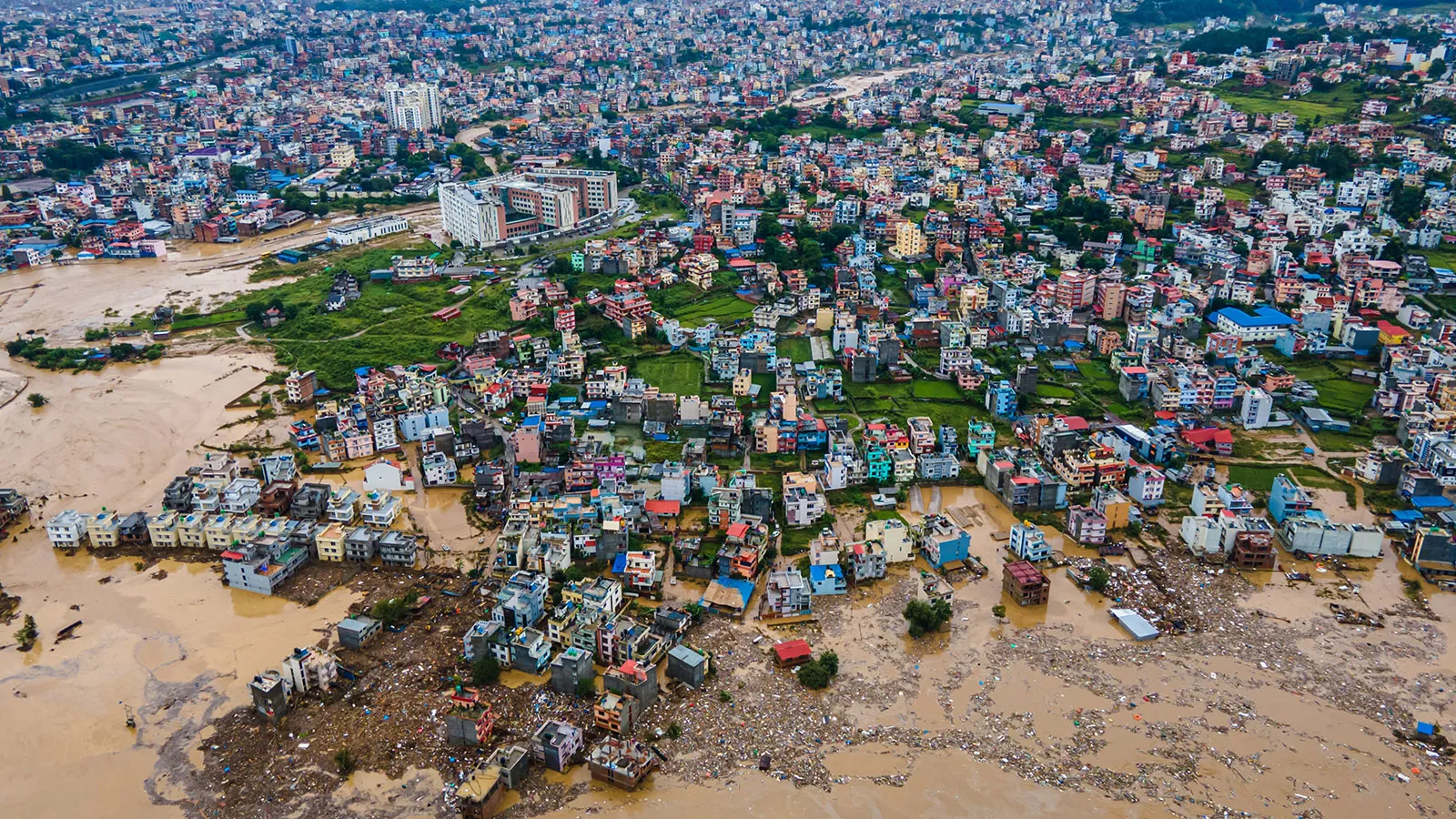
Historic flooding across West and Central Africa has affected an estimated 6.6 million people this monsoon season, triggering a humanitarian crisis. Climate change has intensified global flood risks, with devastating impacts on developing countries, where 89% of the world’s flood-exposed people live.
Ghana’s urban areas, particularly Accra, are highly susceptible to flooding due to rapid urbanisation, inadequate drainage systems, and climate change. The country has seen over 27 major floods in the past three decades, with 15 affecting Accra.
This Tripartite Agreement Programme Ghana Project introduced a risk-transfer scheme with innovative parametric insurance solutions to provide swift financial assistance to affected communities.
The protection gap
In Ghana, over 27 major floods have occurred in the past three decades, 15 of which hit Accra, the rapidly expanding capital. As flood exposure increases, financial protection remains weak. Seven out of ten Ghanaians lack access to insurance and 42% of the population remains excluded from basic financial services.
70% of Ghanaians lack access to insurance and 42% of the population is excluded from basic financial services. The lack of insurance penetration leaves vulnerable communities without financial protection against the impacts of natural disasters.
The insurance solution
After two years in development, the consortium delivered two parametric insurance products: the Excess Rainfall Cover and the Flood Footprint Product.
The Parametric Solution Excess Rainfall (XSR) Cover triggers payouts based on predefined measured rainfall amounts. The Flood Footprint Product (FFP) uses satellite-mounted radar to detect water on the ground, irrespective of rainfall. Although still a relatively new technology, FFP offers high accuracy and has proven effective globally.
By leveraging satellite data and predefined triggers, the scheme ensures rapid payouts, enhancing the resilience of urban populations to flood risks. The insured areas have been carefully selected to cover vulnerable households in low-income and informal settlements in Ghana’s Greater Accra Metropolitan Area (GAMA).
Insured Asset
Financial assistance and emergency relief measures.
Insured peril / hazard
Urban flash floods
Geographic focus
Ghana’s Greater Accra Metropolitan Area (GAMA).
Policyholders
The policyholders will be Ghana’s Ministry of Finance and Ghana’s National Disaster Management Organisation (NADMO) (on behalf of the poor and vulnerable).
Estimated Beneficiaries
- Vulnerable households in low-income and informal settlements in Ghana’s Greater Accra Metropolitan Area (GAMA).
- With the potential to protect 1.2 million directly and up to 5 million people indirectly.
- 5,670,700 people by 2025, of which 30%-40% are poor and vulnerable
Claims Payouts
Claims payouts will go to [Ghana’s Government] to fund the disaster response by the National Disaster Management Organisation (NADMO), including financial payouts for those affected by flood.
Unlike traditional insurance, which pays out based on damage assessments, these parametric insurance solutions offer faster payouts based on predefined parameters – such as rainfall levels or flood severity – enabling communities to recover more quickly after flood events.
Other project benefits
- Development of risk financing solution.
- 40 professionals trained in Climate and Disaster Risk Financing.
- An Inclusive Insurance Certification Programme rolled out with the Ghana Insurance College (GIC).
- Implementation of Inclusive Insurance Awareness Clinics with Insurance Awareness Coordinators Group (as part of the newly developed Inclusive Insurance regulatory roadmap with the National Insurance Commission (NIC)).
- Deepening and strengthening development of local insurance markets.
- Plans in place for further training and capacity-building initiatives.
- In-depth analysis of flood hazard and exposed areas & populations within GAMA.
- Evaluation and selection of suitable parameters/ indices as basis for the insurance cover (e.g. XS Rainfall, observed & modeled flood footprints).
- Calibration of parametric insurance structure and design in close alignment with public stakeholder needs and requirements.
Project impacts
- Ensure the financial resilience of Ghanaian public finances facing urban flood risk.
- Enabling of efficient & effective disaster response and emergency relief in GAMA.
- Mitigation of adverse direct and indirect effects of flooding on the urban population with special emphasis on the poor & vulnerable.
- Better preparedness of Ghana’s National Disaster Management Organization (NADMO) with access to the Flood Contingency Plan delivered by the project and after a series of simulation exercises that tested the contingency plan.
Project Timeline
Project Launch: July 2022
Product Delivery: XXXX
Project formal close: June 2024
Project implementation cost
Approximately EUR 779,975, co-funded by the participating IDF industry members and the German Government through the InsuResilience Solutions Fund (ISF).
Programme Partners
The partners of the Tripartite Agreement Programme are:
- German Federal Ministry for Economic Cooperation and Development (BMZ), through the InsuResilience Solutions Fund (ISF).
- Insurance Development Forum (IDF).
- United Nations Development Programme (UNDP).
Ghana Project Partners
- Ministry of Finance.
- National Disaster Management Organisation (NADMO).
- National Insurance Commission (NIC).
- Ghana Meteorological Agency (GMet).
- Ghana Hydrological Authority.
Key learnings from the Project
Delivered by project team members
The model of the Tripartite Agreement Programme brings together the strengths of government, the private sector, and development partners in a way that no single actor could achieve alone.
One important element is the co-financing of the insurance product development. Creating innovative insurance products is resource-intensive and carries significant execution risks, particularly in developing markets. The co-financing of these early development costs by the German Federal Ministry for Economic Cooperation and Development (BMZ), through the InsuResilience Solutions Fund (ISF), alongside IDF member private insurers, creates a unique ecosystem where insurance industry partners can collaborate and innovate together to design a product that responds to the country’s specific needs.
Also, the sovereign insurance solution. When implemented, the parametric solution becomes a public–private partnership in itself: the private sector provides the risk capacity, while the government leads the emergency response once a payout is triggered. This structure supports more effective and predictable disaster risk management.
Also, capacity building plays a key role. By giving authorities access to detailed risk insights, data and contingency protocols, the project strengthens UNDP’s efforts to build national capacity. This helps institutions such as the National Disaster Management Organisation (NADMO) to respond more effectively when severe flooding occurs.
- Early stakeholder onboarding was essential. Engaging regulatory authorities and insurance associations early in the process helped align expectations and ensure compliance with regulatory frameworks.
- Data availability was a defining factor. Compiling a complete data inventory early helped determine timelines, manage uncertainty, and reduce risk margins.
- A Contingency Plan delivered by the project team will ensure that payouts can be used quickly and effectively, prioritising food relief, emergency shelter, hygiene promotion, restoration of livelihoods, and the repair of essential infrastructure. Alignment with the contingency plan enabled a seamless link between insurance payouts and practical disaster response.
- Capacity building through training programmes ensured the technical knowledge required to sustain and improve the product remains within Ghana’s institutional ecosystem.
- Clear communication played a major role, particularly in explaining the value of insurance in catastrophe risk management and emphasising that insurance delivers stability even when no payout is triggered.
- Planning for political shifts proved crucial. Anticipating transitions in government and securing committed champions early helped maintain project momentum.
- Finally, physical risk drivers matter too. For example, reducing waste blockages and dredging the Odaw River have already led to noticeable reductions in severe flooding. Insurance works best when paired with tangible risk reduction measures.
Comments from the Ghana government