
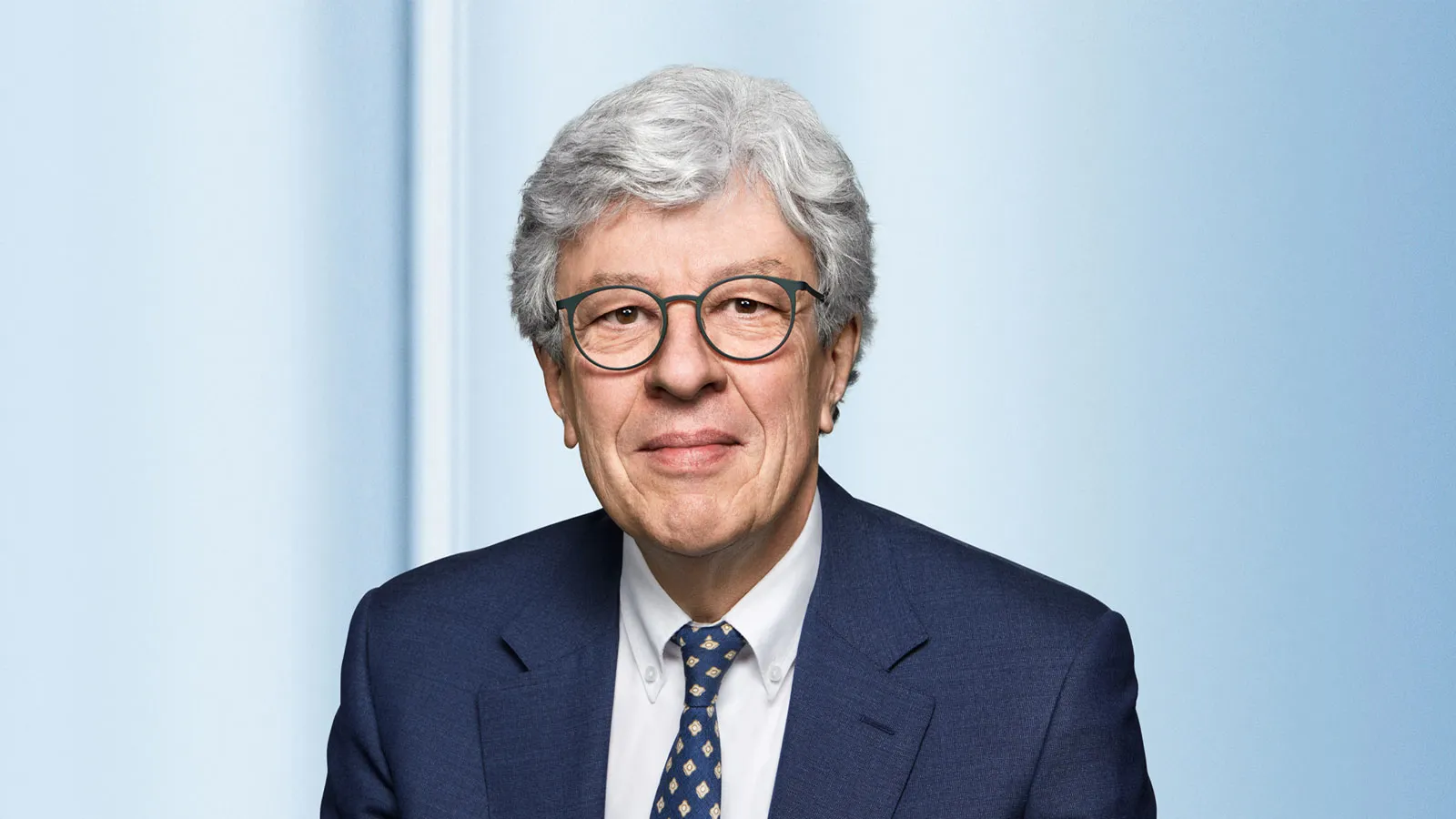
As the Insurance Development Forum marks its 10-year anniversary, we speak with Michel M. Liès, Chair of the IDF Steering Committee, about the organisation’s evolution from an ideas-led initiative into a global delivery platform – and about how it can continue shaping resilience through the use of insurance capabilities.
Drawing on decades of leadership in the insurance sector, Michel reflects on the power of partnership, the role of insurance as a foundation for stability and growth, and why resilience is so important in today’s increasingly uncertain world. From mobilising private capital to embedding risk management into national systems, his insights underline how the IDF is helping countries become future-ready – and why the next decade must focus on scaling impact, transforming systems and protecting lives.
How have you seen the IDF evolve from its early years to today, also in your role as Chair of the IDF Steering Committee?
In the beginning, the IDF was about testing a simple but powerful idea: moving beyond discussions to inform how the insurance industry could engage more directly with the public sector on some of the biggest challenges of our time. It was a period of discovery, trust-building, and innovation.
Over the past decade, we have witnessed the power of partnership and collaboration – from pioneering innovative risk transfer solutions through our Tripartite Programme, establishing open-source risk modelling platforms to enhance risk understanding, to shaping policy dialogues around the role of insurance in climate resilience and financial system reform – our collective efforts have transformed ideas into impact.
The IDF today is widely recognised as an implementation platform, shaping global resilience through practical solutions and proven outcomes.
The IDF’s success depends on collaboration across insurers, governments, development institutions and international organisations. In your experience, what defines a truly effective partnership – and how can the IDF continue to strengthen this network to achieve systemic impact?
In my experience, truly effective partnerships are defined by shared purpose, trust, and a commitment to move from dialogue to action. The IDF has demonstrated this by building open, honest forums for debate amongst insurers, governments and development institutions, and by delivering measurable results through collaborative implementation programmes.
By deepening collaboration and keeping implementation at the core, the IDF can continue to strengthen this network, encourage innovation through joint problem solving and maintaining a relentless focus on delivering practical, scalable solutions.
The IDF’s mission emphasises insurance not just for post-disaster relief, but as a foundation for investment, stability and long-term growth. Why is this message so critical today, particularly for emerging markets and developing economies?
Today we are faced with an environment of rising geopolitical tensions and increasing protectionism. In addition, we are facing record breaking disasters, rising debt burdens and widening protection gaps. These tensions are not isolated—they ripple across borders, economies, and ecosystems – and also remind us that resilience is not just about climate and natural disasters. It is about economic and financial stability, sovereignty, and security.
For many vulnerable economies, the risk of becoming uninsurable is no longer theoretical – it’s a lived reality. In this context, our work in the IDF is more relevant than ever in helping countries navigate this fragility by embedding risk analytics, insurance solutions, and resilience thinking into national systems. Effective risk management enables countries to plan, attract investment, reduce risks and prepare before a crisis strikes.
In addition, as public finance alone cannot meet the scale of investment needed for climate resilience and adaptation, especially amidst financial pressures, growing protectionism and less support for development, mobilising private capital is essential.
Insurance is a means to enable this – while at the same time increasing economic and financial stability – yet remains underused in economic development, often seen only as post-disaster relief rather than a proactive tool for resilience. The IDF is working to change this narrative by showcasing how insurance mechanisms—from risk understanding, risk modelling to insurance solutions — can drive risk prevention, incentivise adaptation, and protect development gains.
- Insurance unlocks investment: By preventing and reducing risks and uncertainty, insurance gives investors and governments the confidence to commit resources to growth and infrastructure.
- It supports stability: Insurance solutions help countries manage shocks—whether from natural disasters or economic disruptions – protecting livelihoods and public finances.
- It drives long-term development: With risk transfer mechanisms in place, countries can focus on sustainable growth, knowing they have a safety net.
Resilience is not a luxury; it is a necessity for peace, prosperity, and preparedness in an increasingly uncertain world.
IDF’s vision is encapsulated in the line “building future-ready nations”. What does this concept mean to you, and how do you see the IDF enabling countries to achieve it?
To me, building future-ready nations means equipping countries, communities, and economies to recover quickly, attract investment, and thrive amid growing risks. The IDF’s renewed vision is to make insurance a cornerstone of development – as both a convening platform and a global implementation force.
This is urgent now, as climate shocks, geopolitical instability, and economic volatility make resilience essential. Many vulnerable economies face the real risk of becoming uninsurable. The IDF enables countries to navigate this fragility by embedding risk analytics, insurance solutions, and resilience thinking into national systems, mobilising private capital, and driving policy transformation.
With over 45 projects in 28 countries and more than USD 50 million mobilised, the IDF has shown that insurance can prevent losses, protect development gains, and provoke systemic change. By 2030, success will be measured not just in projects delivered, but in systems transformed and lives protected.
As Chair of the IDF Steering Committee and throughout your distinguished career in the insurance sector, what moments have been most meaningful for you personally in advancing the role of insurance for societal resilience, and what continues to inspire your commitment to the IDF’s mission?
I have worked in the insurance space for most of my career and have had the pleasure and privilege of living in many countries and working with people of many different backgrounds. I have witnessed first-hand the devastating impacts of wildfires, windstorms, floods, heatwaves, and other extreme weather events on people’s lives. Working in the industry, we also witness first hand the devastating economic costs of extreme weather events. We are still in a world where it is easier to mobilise monies after a disaster, when we can see how people are suffering, than it is to invest before to protect people and communities from those disasters.
Yet I have also seen how, when we come together as a society, including the insurance industry, communities and governments, how we can help people recover quicker. How, when we work together, we can reduce people’s suffering by investing in risk prevention.
I have always wondered why, when the World Bank was created, why we did not create a World Insurance Company – an institution that supports countries managing their risks – perhaps even working with country risk officers whose mandate is to understand, manage and reduce the risks to economic development and humankind. If we dream big, perhaps we can work towards something like that.
Working towards that idea, making insurance a cornerstone of development and positively impacting people’s lives, securing their futures as well as the futures of the next generations to come, it is this that continues to inspire and motivate me.