
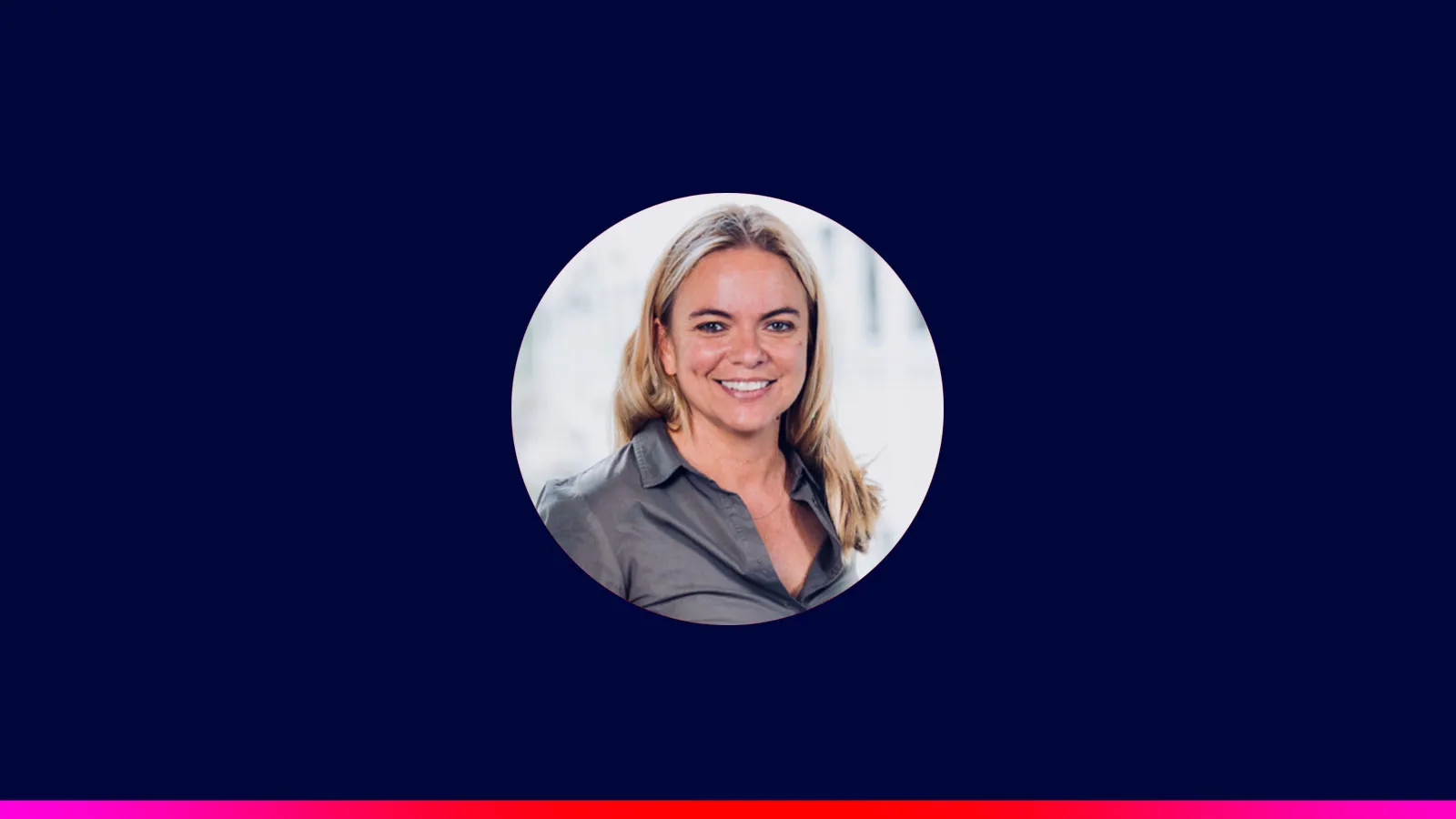
As the Insurance Development Forum marks its 10-year anniversary, inclusive insurance has moved from the margins to the core of the global resilience conversation. Here, Garance Wattez-Richard, CEO of AXA EssentiALL, member of the IDF Operating Committee and co-chair of the IDF Inclusive Insurance Working Group, shares her perspective on how collaboration across the industry and its value chain has helped reshape what is possible for modest and un(der)served communities.
Garance reflects on the power of systems-level collaboration – from integrating inclusive insurance into multi-partite projects to building collective industry influence in policy and development finance. She also looks ahead to the next decade, calling for bolder innovation (now that progress is on track), the breaking down of silos between risk categories and stronger public–private models that integrate in particular health and climate protection into scalable solutions.
What motivated you to engage with the Insurance Development Forum, and take on your role as member of IDF Operating Committee and co-chair of the IDF Inclusive Insurance Working Group (IIWG)?
Inclusive insurance is often seen as a ‘winner-takes-all’ game, at least between insurers, because it is a bottom-up sector play that aims to protect, profitably, the more modest populations. At first glance, this seemingly does not leave space for more than one insurer at a time, as ticket sizes are perceived to be too small. But it’s not that simple. Our industry is limited by several existential challenges and resolving these needs close collaboration across and beyond the insurance sector.
The Insurance Development Forum and its Operating Committee was, and still is, the perfect environment for such a collaboration: a platform for driving systems-level change by sharing efforts with like-minded institutions through influence in policy, advocacy and investment in products, technology but also in collaboration with other industries. The co-chair role of the IIWG is even more focused and operational, bringing with it the ability to steer where we want to take the discussion concretely, what country, with what actors, for what ambition. It also means working with and learning from experts in their individual fields, passionate about scaling inclusive insurance and the track record to prove it.
Where do you think the IDF has made the greatest progress in closing protection gaps for vulnerable communities, and where does the biggest challenge remain?
The IDF has really moved the needle in harnessing the power of its membership to build lasting, scalable solutions addressing climate risk. Within the Tripartite Agreement Programme, inclusive climate insurance practices have been successfully integrated into flagship projects. A good example was the development of a parametric product for smallholder farmers in Mexico. This project led to IDF working groups coming together, leveraging strengths across product design, development, and last mile distribution, to implement a pilot with a 94% enrolment rate, now scaling with local government support.
The IDF has also played a convening role, providing industry updates on external programs like the Global Shield for Climate Risks, which has prioritized inclusive insurance in its in-country diagnostics, and convening key stakeholders to discuss more technical challenges they may face in their markets, such as CGAP’s work in the IIWG on inclusive insurance regulation. But it’s now time to go further. The Forum has the legitimacy and credibility to take its next step and here I am in particular thinking about bundling risks (killing the usual siloed approach) to integrate health-related products and address associated protection gaps.
One of the IDF’s great successes has been its power to convene actors around a common ambition, and give the insurance industry a collective voice in the wider development finance ecosystem – something historically lacking, particularly when it comes to financial inclusion. It filled a gap deep and wide. Now it needs to build above ground.
As CEO of AXA EssentiALL, what leadership lessons are most relevant to the IDF’s work on innovation, scale and public-private collaboration?
Innovation starts with daring. Daring to address unaddressed segments of the population, design new solutions, collaborate with a greater variety of distribution channels, build the operations to leverage them, test new models, and learn from the ones that don’t work (I mean from the ones that work first of course!). This mindset is essential for the IDF’s innovation / soft standard-setting agenda. It’s hard to drive change and push first mover or even early adoption through a consortium of so many players, with different cultures and objectives, and the IDF is successfully doing just that. I think one of the main reasons is that it is building on the experience of its members, who with a lot of humility have made sure to share their “lessons learned”. The IDF is a consortium of strong, global members who have not fallen into the trap of thinking that it can be stronger or more impactful than what its members let it be. And so have made sure that it is given the means to succeed.
Looking ahead, what should be the IDF’s top priorities over the next decade to accelerate progress on financial health, fair transition, resilience and protection gaps?
The landscape of global risks is changing, and societies are coming apart at the seams. With mutualization as its DNA and protection as its ambition, insurance has both the ability and the duty to contribute to the re-stitching of our social fabric.
The IDF has the ideal positioning to drive the increased adoption of insurance, by spearheading the inclusion of health and other risks in traditionally climate-focussed solutions developed by PPPs. We have seen that this type of collaboration works and can scale, and the IDF 2.0 has at its fingertips everything it takes to reach new forums and platforms, as is already being showcased by IIWG projects such as the work done in remittance-linked health protection and in the distribution of insurance products through Postal Networks. More than ever is the role of a forum such as the IDF justified, gap-filling, value-adding. I very much look forward to this next phase.