
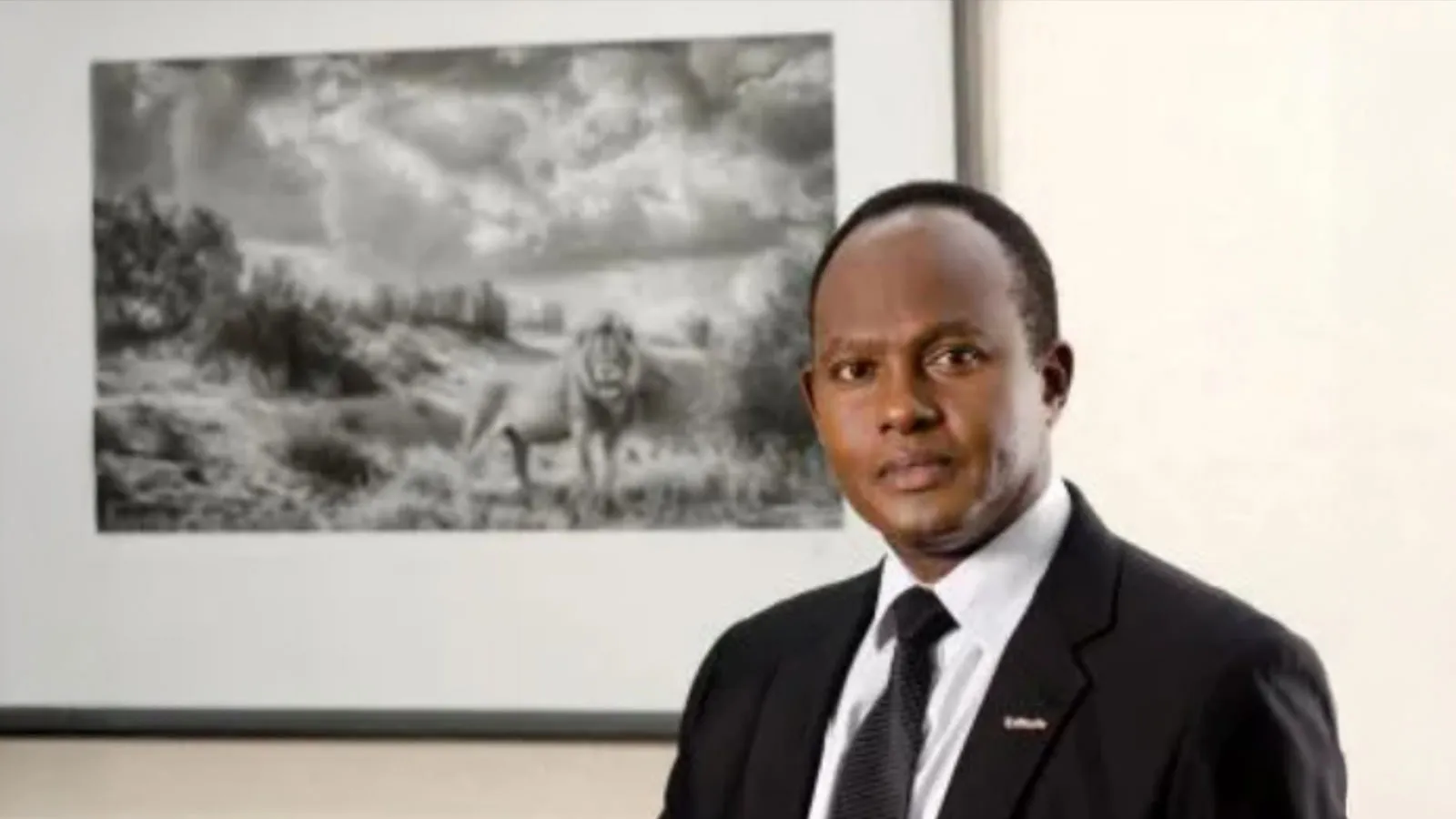
African perspectives on risk, resilience and insurance are centrally important to the work of the IDF. In this 10-year anniversary reflections interview, Dr Corneille Karekezi, Group Managing Director and CEO of the African Reinsurance Corporation (Africa Re), shares his insights after joining the IDF Steering Committee in 2025.
Drawing on more than three decades of experience spanning local insurance markets in Burundi and Rwanda, to leading Africa’s largest reinsurer, Dr Karekezi reflects on how risk and resilience priorities have evolved across African markets and globally, and what this means for the IDF’s role in closing protection gaps, strengthening political engagement and scaling use of insurance capabilities for resilience.
From partnership models and emerging climate risks to the importance of pan-African collaboration, he offers a clear and candid perspective on how insurance can drive macroeconomic resilience across the continent in the decade ahead.
As you joined the IDF Steering Committee in 2025, what led you to accept this role and what insights or priorities from your experience in African re/insurance do you wish to bring to the Forum?
The African Reinsurance Corporation (Africa Re) is a unique organisation with the mission to “foster the development of the insurance and reinsurance industry in Africa; to promote the growth of national, regional and sub-regional underwriting and retention capacities and to support the African economic development”.
With a broad-based and diversified shareholding made of 42 African States, the African Development Bank, 112 African based insurance and reinsurance companies, as well as leading global insurance groups, Africa Re is uniquely positioned to contribute the vision and mission of the IDF. Therefore, joining IDF aligns well with our mission, and we are committed to working with other stakeholders in tackling emerging global challenges such as climate change by providing reinsurance capacity and developing innovative insurance solutions.
With Africa Re celebrating in 2026 its 50 Years Anniversary, we have come to age or maturity and wisdom in carrying out our above mentioned mission especially in the continent of Africa where we are the premier indigenous reinsurer. Our mission has been indeed a guiding principle of our success story. It has been a story of resilience, geographic spread, recognition and awards as well as excellent Financial Strength and Credit Ratings based on A (Strong / Stable Outlook) by Standard & Poor’s and A (Excellent / Stable Outlook) by AM Best. Beyond financial performance, Africa Re has been one of the most reliable partner and consultant of the African government and insurance regulators in the development of the African insurance sector.
It is a privilege and honour to be nominated to represent the interests of the African insurance confraternity including contributions to steering the strategic direction of such an institution. We will be deepening conversations, encouraging diversity and championing worthy projects that promote African interests in alignment with the global mandate of the IDF on risk and resilience through insurance and related solutions.
The IDF commands influence and impact around the world in leveraging insurance as a channel for macroeconomic resilience through policy advisory, risk management, risk protection, resource mobilization and stakeholder collaboration. As one of the representatives of the African continent, I will be presenting our unique perspectives to strengthen strategic orientation, situational contexts and collaborative engagements through sharing knowledge, insights, gaps and priorities in relation to climate change and natural disasters as well as their associated economic shocks for better solutions for strategic alignment and optimum impact.
Having begun your career in 1991 in insurance roles in Burundi and Rwanda, then progressed to lead Africa Re, how do you see the shifts in risk and resilience priorities both in African markets and the global stage, and how might these shape the IDF’s next decade?
The story of risk and resilience in the African markets and the global stage has different pathways. While the global stage has moved from a reactionary posture to a proactive stance, the African markets have remained underdeveloped and reactionary, although they have evolved from significant ignorance to active engagement despite being constrained by sustainable financing challenges, low financial literacy, overarching informal sector, and limited political support.
The African insurance markets are facing tough choices and having immense opportunity to contribute to crucial emerging climate related risks and to closing insurance gap, while increasing the insurance penetration, if its future is to be secured and resilient.
The progress in the World today can be encapsulated by the 2015 Paris Climate Agreement and other related sustainability financing, industry-specific projects, and climate adaptation initiatives as well as the annual COP events to assess progress and agree on collective next steps on international climate policy and cooperation.
In Africa, we also have the 2024 Windhoek Declaration on advancing disaster risk reduction, climate adaptation, and drought resilience through better early warning systems, integrated planning, and increased investment. The African industry has also championed the 2021 Nairobi Declaration on Sustainable Insurance.
These interventions in climate risk management and financing are currently being constrained by divergent political views and economic arguments including emission contributions, economic concerns, sovereignty positions and fairness considerations. The IDF is well positioned over the next decade to facilitate and promote solutions that meet the needs of countries, regions and continents through local partnerships, resource mobilization, innovating product development and capacity building.
On the other side, African insurance markets have to accelerate their development by tackling persistent challenges, through focus on implementing the known actions, and thanks to new technologies available in abundance. The November 2025 IDF paper “Increasing Insurability to Close the Protection Gaps” has very well analyzed the problems and proposed solutions.
Africa remains one of the regions with the largest insurance protection gaps. In your view, what are the most critical obstacles (capacity, modelling, distribution, regulatory, capital) that the IDF should help tackle over the next five years?
There is a clear distinction between insurance penetration and protection gap as the latter focuses on the the gap between insured and economic losses per product line or risk while the former focuses on total insurance premium as a percentage of GDP. Closing the protection gap ensures that risks are managed optimally and vulnerabilities are eliminated to build resilience. Increasing the insurance penetration rate contribute to mobilizing short and long term financial resources as well as deepening the financial literacy.
The obstacles to improving the protection gap are known to all industry stakeholders including government ministries, departments and agencies especially the accessibility, awareness, availability and affordability concerns from the lens of industry players.
However, the political will and understanding of the value proposition of insurance by policymakers are at the core of the problems for product lines that have large-scale impact on insurance penetration and protection gaps.
It is pertinent to note that insurance offers a probable and plausible intervention in the case of a disaster. With limited fiscal space and budgetary constraints, governments are compelled to focus on the short-term and may not prioritise the value proposition of insurance for macroeconomic resilience. Additionally, affordability has been a significant issue that has created a misalignment between available insurance coverage and potential risk exposure that has made them either unattractive to insurers or too expensive for the insureds. There is a need to augment financing to address the affordability challenges. Also, to build trust, there is a need to strengthen innovative solutions such as parametric and microinsurance.
Overall, the critical areas of intervention are political pressure, sustainable financing mechanisms and national insurance strategic orientation.
We at the African Reinsurance Corporation have developed a robust climate resilience toolkit following engagement with industry regulators in 2021. Discussions are ongoing with the governments of Ghana, Ethiopia and Rwanda with progress from genuine interest and limited political will. The “Africa Re Foundation” is currently supporting the government of Rwanda both technically and financially in the development of a consolidated national insurance strategy. The draft documents are being presented to the presidential cabinet at this time.
Public-private collaboration lies at the heart of the IDF. Drawing from your experience with Africa Re and African insurance bodies, what are the key success factors for effective partnerships in African markets, and what are recurring pitfalls?
Tackling global challenges like those defined under the IDF mandate requires collaboration of many stakeholders. No single institution or individual has the capacity to do it alone. This realization creates the urgency to bring together a broad range of stakeholders to achieve shared objectives. Each partner brings on board unique capabilities that help fast track attainment of shared objectives.
In the context of IDF, Africa Re brings on board unique client relationships and continental risk knowledge, that helps share our insurance value proposition in tackling global challenges like climate change and response to natural catastrophes.
As an example, developing and distribution of new climate insurance solutions requires the involvement on traditional insurance value chain actors but also other non-insurance partners such as governments, humanitarian organizations, and development partners, among others.
However, to achieve desired outcome with minimal friction, there is need for alignment of business goals and refinement of shared visions in global partnerships.
The structure of partnerships today are mainly through Regional Risk Pools through the African Union for instance Africa Risk Capacity, Direct Partnerships with Industry Stakeholders facilitated by International Bodies like the IDF which includes the Lagos Flood Programme and Special Programmes promoted by African and International Multilateral Institutions such as the DRIVE (De-Risking, Inclusion, and Value Chain Enhancement) project for pastoralist economies in selected countries, REPAIR (Regional Emergency Preparedness & Access to Inclusive Recovery) which provide participating countries with pre-positioned financing to respond to varying scales of climate shocks and ACRIFA (Africa Climate Risk Insurance Framework for Adaptation) that was set-up to deploy concessional, high-risk capital and grants to build climate resilience in Africa.
It is pertinent to note that Africa is not a country, it has 54 sovereign nations of over 1.5 Billion people that speak over 1,500 languages. This makes it difficult to find a one-size fits all partnership due to national peculiarities. While we continue to see progress towards a joint approach, the current successes are plagued by broad regional fragmentation, weak government commitment and long-term sustainable financing concerns. One of such difficult projects is the cross-border motor insurance scheme of Brown (14 ECOWAS Countries), Orange (13 Arab League Countries), Yellow (13 COMESA Countries) and Pink (6 CEMAC Countries) Card Schemes. It is expected that the AfCFTA agenda to create a common market can improve collaboration efforts with African and international bodies.
The interventions that have recorded some success have legislative backing, regulatory support, regional segmentation approach, catalytic financing and innovative solutions. However, the current successes are plagued by broad regional fragmentation, weak government commitment and long-term sustainable financing concerns. It is important to rethink partnership through influential and capable pan-African players who are committed to the progress of the continent. Africa Re remains a willing and committed partner to bring industry stakeholders together to harness the value proposition of insurance for individuals, businesses and governments.
What climate-related emerging risks (for example to infrastructure, health, currency/devaluation) do you see as most urgent for Africa?
The incidents of climate-related risks on the continent with devasting impact have revolved around floods, droughts, cyclones and sometimes earthquakes. These climatic events have caused lasting damage to the economies of affected countries including the loss of lives, damage to critical infrastructure and property as well as the destruction of arable land. Apart from the key consideration to protect human lives, the impact of critical infrastructure and food security also have dire consequences for the local economy and contagion effect for neighbouring countries.
As an example, Cyclone Idai of 2019 predominantly affecting Mozambique but with contagion effect in parts of Madagascar, Malawi and Zimbabwe had human, economic, social and environmental impact. It was estimated to have led to a loss of 1593 lives and many more missing. It further destroyed sizeable arable land as well as critical national and regional infrastructure. The cost of rebuilding and recovery have been significant with the event estimated at US$ 3.3 Billion which diverted financial resources from budgeted development priorities and led to a possible slowdown in economic progress.
Reflecting on your personal journey, from early insurance roles in Burundi and Rwanda to leading Africa Re and now contributing in the IDF at global level, what has inspired you most, and how does this new role align with your personal mission and values?
My sojourn into the insurance world as an executive is a story of resilience from being a Chief Accountant and Director of Reinsurance at Société d’Assurances du Burundi (SOCABU) in 1991 to joining Société Nouvelle d’Assurances du Rwanda (SONARWA) in 1995 to rising through the ranks and eventually becoming the Chief Executive Officer in 2008.
I was then appointed as the Deputy Managing Director / Chief Operating Officer of the leading pan-African reinsurer, African Reinsurance Corporation, in 2009 as a succession plan to becoming the Group Managing Director / Chief Executive Officer.
This career journey is synonymous with the story of Rwanda from the crisis of Rwandan refugees in 1959, which made that I was born in Burundi, to the ruins of the Genocide against the Tutsi of Rwanda in 1994, after which I joined other returning refugees to rebuild Rwanda and its insurance market. And now, contributing to the development of the African insurance and reinsurance industry is a privilege and duty which I carry with passion and pride.
These formative experiences, educational orientation, professional exposure and religious beliefs have shaped my personal values as a resilient executive, radical optimist, strategic visionary, excellent executor and continuous learner.
These personal philosophies are summarised by the inspirational poem by Rudyard Kipling titled “IF” written in 1895 and published in 1910 that was presented as a father’s guidance to his son. It highlights life lessons that reinforce my stoic beliefs, self control, resilience and integrity. These are the core elements of leadership and impact that are aligns with the core principles of the IDF.