
The Lagos State government has contracted a parametric flood-risk insurance policy in the Nigerian insurance market, covering up to 4 million vulnerable people and securing up to USD 7.5 million for flood response and recovery.
Lagos/London/Geneva, 26 March, 2026: The Lagos State government has contracted a parametric flood-risk insurance policy in the Nigerian insurance market, covering up to 4 million vulnerable people and securing up to USD 7.5 million for flood response and recovery.
The policy’s activation is a major milestone for the Tripartite Agreement Programme – a public-private partnership between the Insurance Development Forum (IDF), the United Nations Development Programme (UNDP), and the German Federal Ministry for Economic Cooperation and Development (BMZ) through the InsuResilience Solutions Fund (ISF) – to build developing countries’ resilience to climate risk.
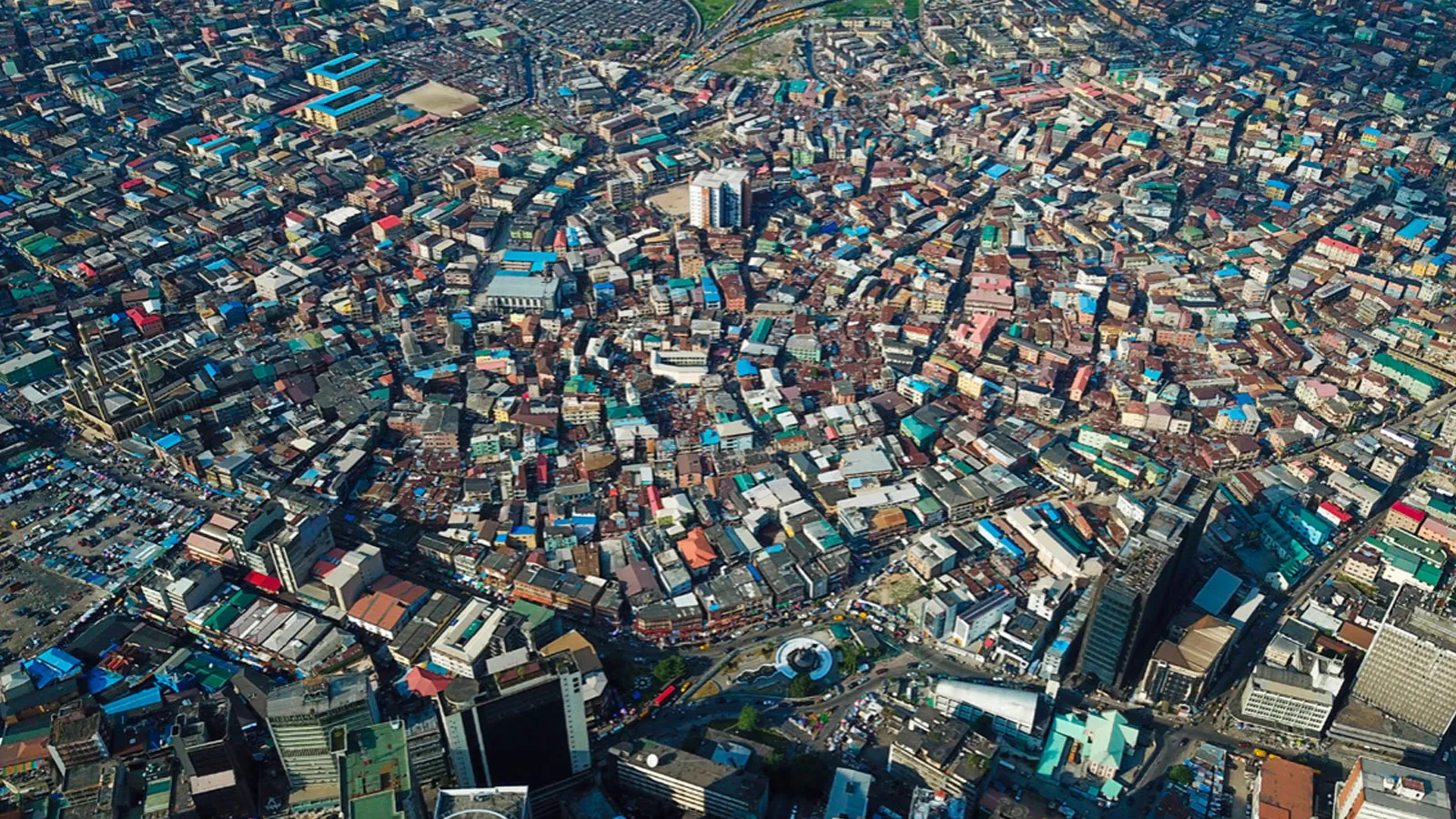
For the coastal megacity of Lagos, with an estimated population of over 22 million people, climate change is intensifying the frequency and impact of flood events. These impacts are exacerbated by rapid urbanization across Lagos State, where low-income households make up 80 percent of the population and insurance penetration is below 0.5 percent. The Tripartite Agreement Programme’s Nigeria project, led by the Government of Lagos State, was launched in 2022 to unlock financial resources for communities to prepare for and recover from climate-impacts.
His Excellency, the Governor of Lagos State, Babajide Olusola Sanwo-Olu said:
“Climate inaction could cost Lagos State just under USD 40 billion by 2050, with severe consequences for our people, infrastructure and economy. Our wetlands and biodiversity are also under threat. These realities demand urgent action. This pioneering parametric flood insurance policy strengthens our ability to protect lives, livelihoods and public finances while embedding climate risk management into Lagos State’s long-term development planning.”
Dr. Katharina Stasch, Director-General for Multilateral Development Policy; Transformation; Climate, German Federal Ministry for Economic Cooperation and Development (BMZ), said:
“This product highlights the impact that effective collaboration between governments, insurance and development partners, can deliver. As climate risks continue to rise, BMZ is proud to have supported the Tripartite Agreement Programme’s efforts to scale sovereign risk finance and to witness the new alliances and models for cooperation emerging through the programme.”
The parametric flood-risk product was designed by a team of IDF member insurance organizations in partnership with the Lagos State Government, including AXA Climate, AXA Mansard in Nigeria, Swiss Re, flood modeler JBA Risk Management, satellite company ICEYE and African Risk Capacity Ltd. This work was co-funded by ISF and the IDF insurance industry members and supported by UNDP Nigeria and UNDP’s Insurance and Risk Finance Facility. Partners in Nigeria include the Lagos State Government Office of Sustainable Development Goals (OSDG), the Lagos State Ministry of Finance, Lagos State Ministry of Budget and Economic Planning and the Lagos State Emergency Management Agency (LASEMA).
Marcos Neto, UN Assistant Secretary-General, and Director of UNDP’s Bureau for Policy and Programme Support said:
“This milestone in Lagos shows that embedding insurance into public planning can strengthen support for vulnerable communities while advancing inclusive, climate-resilient development. As climate risks intensify, Lagos State is offering a scalable and sustainable model for safeguarding livelihoods and public finances.”
Karina Whalley, Head of Public Sector, AXA Climate and IDF Lagos Project Co-Lead, said:
“This policy demonstrates the power of insurance to enable preparedness ahead of and faster recovery after disasters, as well as greater financial resilience for governments; in short, future-ready nations. The product design harnessed our industry members’ technical expertise in flood risk modelling and parametric insurance to develop a scalable solution tailored to the needs of climate-vulnerable communities in Lagos.”
The insurance product was delivered by the IDF team and received regulatory approval earlier this year. Placement of the product has been enabled through 90 percent of premium finance from the ISF for the first year. The Lagos State government is committed to increasing their premium finance allocation beyond 10 percent in the second and third year of the policy, to ensure the sustainability of the protection provided by the product.
Dr. Annette Detken, Head of InsuResilience Solutions Fund (ISF), said:
“With this policy now live, financial resources can flow quickly and predictably to communities when floods strike, helping to safeguard lives and livelihoods. ISF is proud to have supported this innovative public-private partnership, which demonstrates how government leadership, industry expertise, and development finance can come together to build sustainable, scalable solutions. By committing to long-term financing, Lagos State is laying the groundwork for a national model of climate resilience and financial protection for Nigeria.”
The policy is now live, enabling the local Government to quickly access funds to support emergency response efforts. This includes disaster relief and direct cash transfers to affected communities in seven local government areas covered by the policy, as has been outlined in the Lagos Flood Contingency Plan which was developed with the support of UNDP and the African Risk Capacity. UNDP is also supporting the Government of Nigeria with the integration of risk finance into Nigeria’s Nationally Determined Contribution (NDC) 3.0.
The Government of Nigeria is considering scaling this pioneering insurance solution to other states. The project also offers a blueprint for technology driven flood-risk insurance that can be applied for resilience building in climate-vulnerable countries and cities around the world.
– END –
Link to Tripartite Agreement Programme Nigeria Case Study
About the Insurance Development Forum
A unique public–private partnership, the IDF helps close protection gaps so that people, businesses and nations can recover faster from disaster, attract investment and thrive.
Led by industry and co-chaired by the United Nations Development Programme (UNDP) and the World Bank Group, the IDF aligns insurance expertise with public policy and development priorities to drive resilience. It brings together change agents from across sectors to help build future-ready nations. For more information, visit: www.insdevforum.org.
About the United Nations Development Programme (UNDP)
The United Nations Development Programme (UNDP) is the leading United Nations organisation fighting to end the injustices of poverty, inequality, and climate change. Working with a broad network of experts and partners in over 170 countries, UNDP helps nations to build integrated and lasting solutions for people and the planet. UNDP Nigeria is driving a new era of development through its Integrated Smart States Programme (ISSP), a bold, system-wide approach that delivers high-impact solutions across Nigeria’s diverse regions. At its core are five flagship portfolios focused on innovation, digital transformation, and the knowledge economy; trade, investment and financing for development; integrated, clean and decentralized energy systems; and accelerated community development. Together, they enable inclusive, locally led growth, while deepening institutional capacity and unlocking scalable, future-ready development pathways. Learn more: https://www.undp.org/nigeria.
Media contact
Ceandra Faria,
ceandra.faria@undp.org
Christabel Chanda-Ginsberg,
christabel.chanda-ginsberg@undp.org
About InsuResilience Solutions Fund (ISF)
The InsuResilience Solutions Fund (ISF) aims to support innovative solutions that help mitigate the negative impacts of climate change. Managed by Frankfurt School of Finance & Management and financed by KfW Development Bank on behalf of the German Federal Ministry for Economic Cooperation and Development (BMZ), the ISF works to close the protection gap by targeting vulnerable populations disproportionately affected by climate risks. To achieve this, ISF fosters the development of needs-based, financially sustainable climate risk insurance products in developing and emerging countries.
Media contact
Marianna Aguilera,
m.aguilera@fs.de