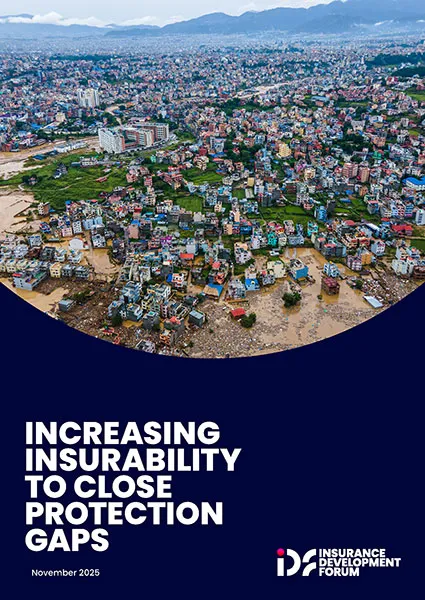

EMDEs face two critical challenges which put their development gains at risk and often thwart their ambitions for economic growth. Firstly, the protection gap for natural catastrophes; 90% of economic losses from natural catastrophes that are not insured in EMDEs. Secondly, the climate finance gap; the 2025 COP30 Baku to Belem roadmap targets USD 1.3 trillion in annual investment to 2035 to build more climate resilient economies in EMDEs.
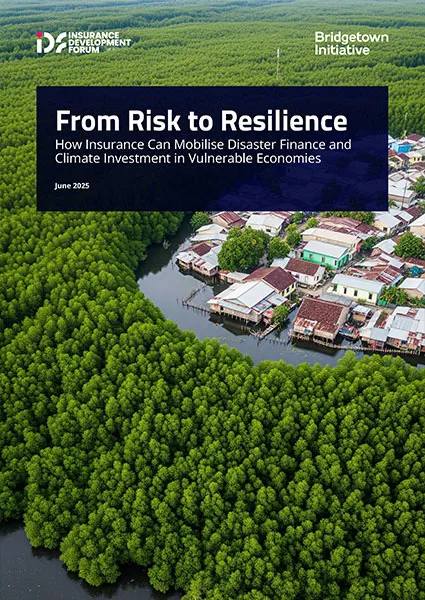
This paper by the IDF-Bridgetown Initiative Partnership presents recommendations for action by Governments, MDBs, insurers and regulators to help close the disaster protection gap, mobilise capital, and shift development finance from reactive to resilient.
It outlines how – if all relevant actors drive change —insurance through its full capabilities as a provider of risk insights, an underwriter, a long-term investor—can help close protection and financing gaps, presenting four concrete leverage points to scale impact. in emerging markets and developing economies (EMDEs).